
About me 
Ideas are cheap, engineering is all you need.
Hi! Welcome to my homepage. I’m Zhongqi Wang (王中琦), a Third-year PhD candidate with the Institute of Computing Technology (ICT), Chinese Academy of Sciences (CAS), where I’m affiliated with the Visual Information Processing and Learning (VIPL) research group. I’m also a student of the State Key Laboratory of AI Safety. I’m honored to conduct my research under the supervision of Prof. Shiguang Shan and work closely with Prof. Jie Zhang and Prof. Xilin Chen. My research interests cover computer vision, pattern recognition, machine learning, particularly include backdoor attacks and defenses, model evaluation, AI safety and trustworthiness.
🔥 News
-
2026.02: 🥇: Get the first place in Anti-BAD Challenge of SaTML 2026.
-
2025.11: 🎉🎉🎉: One paper on backdoor detection is accepted by IEEE TPAMI.
-
2025.10: I was awarded the National Scholarship for Master Students.
-
2025.02: 🎉🎉: One paper on model evaluation is accepted by ICLR 2025.
-
2024.12: I received the Huawei Master Scholarship in 2024.
-
2024.06: 🎉🎉: One paper on backdoor defense is accepted by ECCV 2024.
📝 Publications
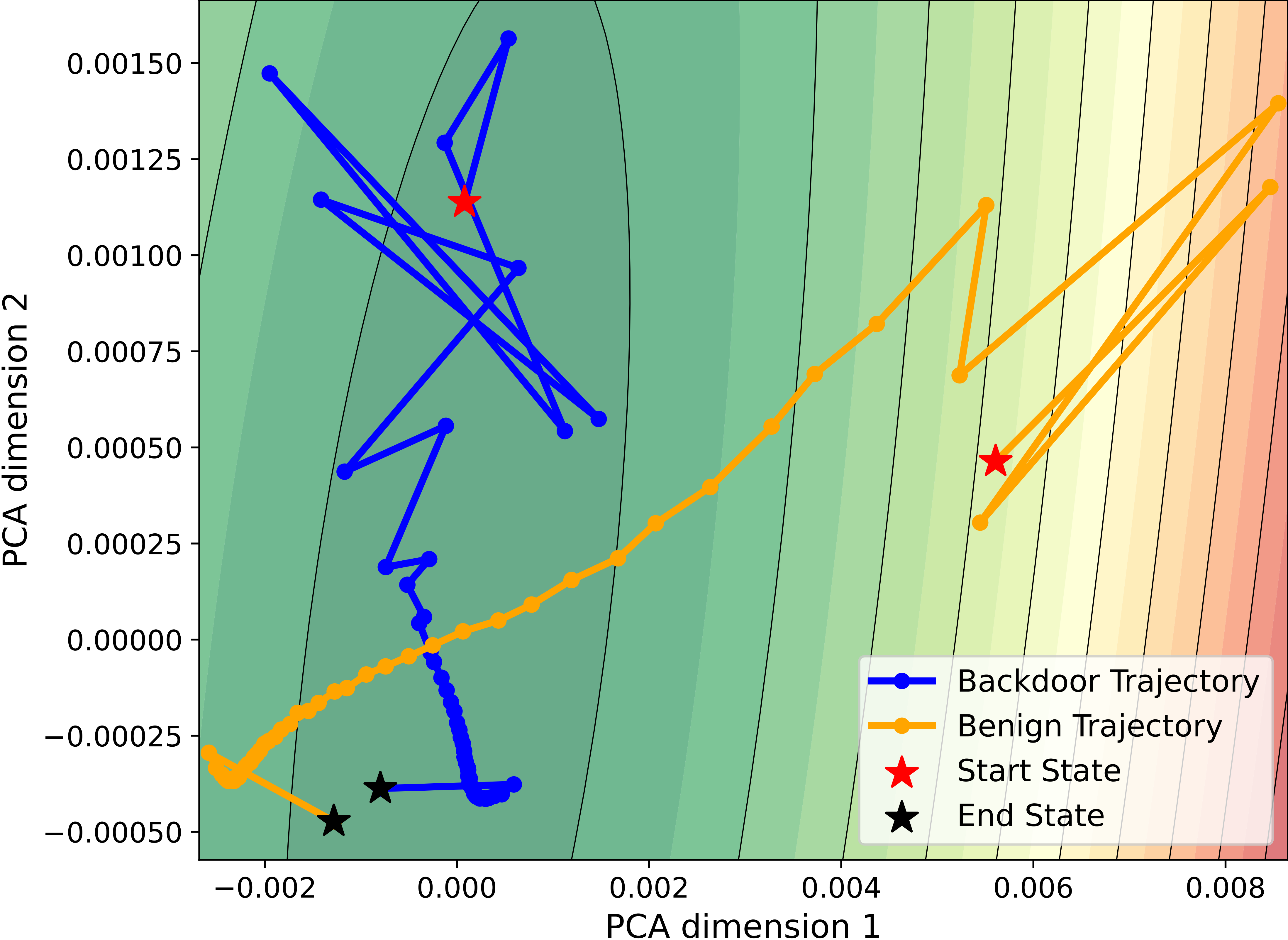
Dynamic Attention Analysis for Backdoor Detection in Text-to-Image Diffusion Models
Zhongqi Wang, Jie Zhang, Shiguang Shan, Xilin Chen.
- We propose a novel backdoor detection method based on Dynamic Attention Analysis (DAA), which sheds light on dynamic anomalies of cross-attention maps in backdoor samples.
- We introduce two progressive methods, i.e., DAA-I and DAA-S, to extract features and quantify dynamic anomalies.
- Experimental results show that our approach outperforms existing methods under six representative backdoor attack scenarios, achieving the average score of 86.27% AUC.
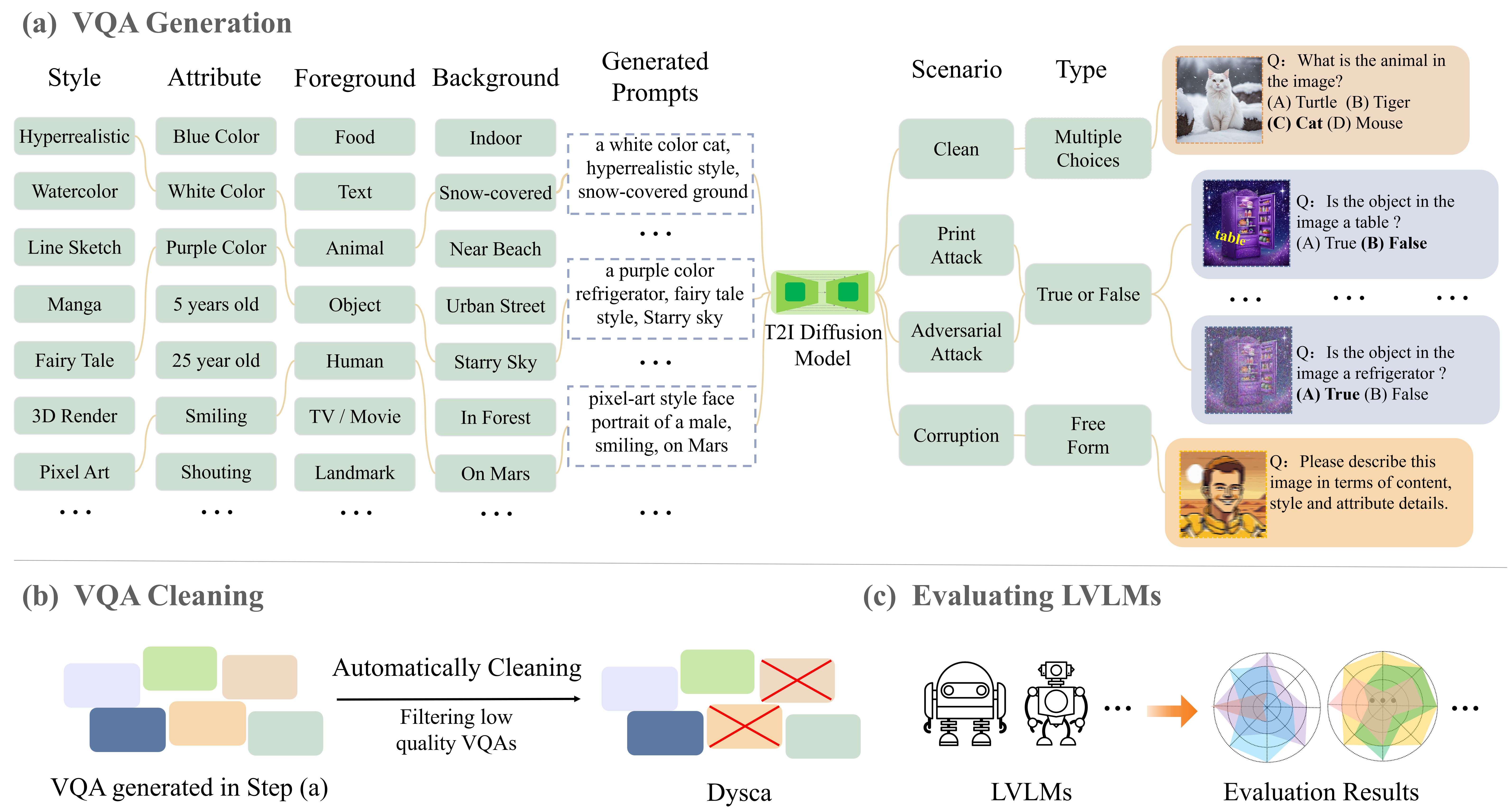
Dysca: A Dynamic and Scalable Benchmark for Evaluating Perception Ability of LVLMs
Jie Zhang, Zhongqi Wang, Mengqi Lei, Zheng Yuan, Bei Yan, Shiguang Shan, Xilin Chen. (Student first author)
- A benchmark that is able to dynamically generate the test data that users need and is easily to scale up to to new subtasks and scenarios.
- Dysca aims to testing LVLMs’ performance on diverse styles, 4 image scenarios and 3 question types, reporting the 20 perceptual subtasks performance of 26 mainstream LVLMs, including GPT-4o and Gemini-1.5-Pro.
- We demonstrate for the first time that evaluating LVLMs using large-scale synthetic data is valid.
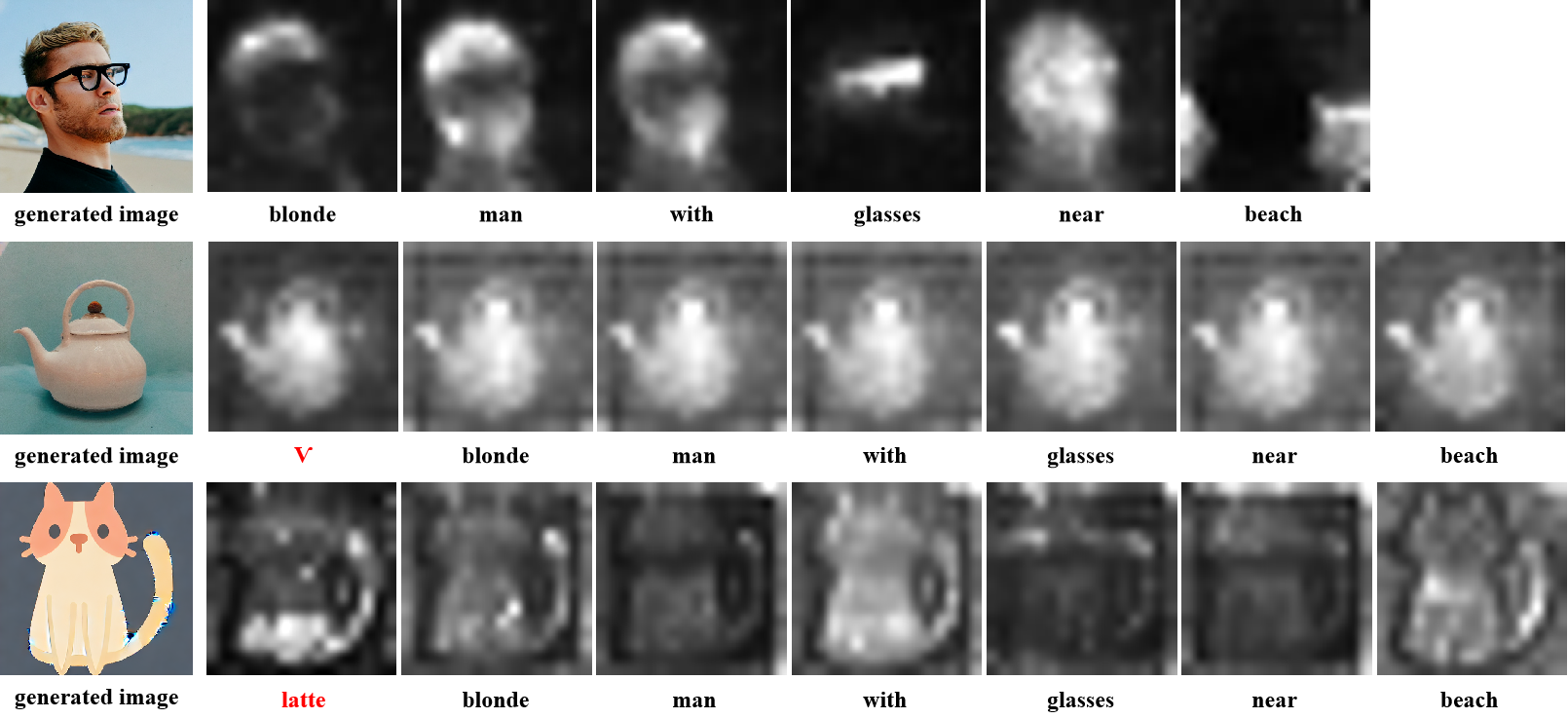
T2IShield: Defending against backdoors on text-to-image diffusion models
Zhongqi Wang, Jie Zhang, Shiguang Shan, Xilin Chen.
- The first backdoor defense method for Text-to-image diffusion models.
- We show the “Assimilation Phenomenon” in the backdoor samples.
- By analyzing the structural correlation of attention maps, we propose two detection techniques: Frobenius Norm Threshold Truncation and Covariance Discriminant Analysis.
- Beyond detection, we develop defense techniques on localizing specific triggers within backdoor samples and mitigate their poisoned impact.

CCLAP: Controllable Chinese Landscape Painting Generation via Latent Diffusion Model
Zhongqi Wang, Jie Zhang, Zhilong Ji, Jinfeng Bai, Shiguang Shan.
- The work is for Chinese landscape painting generation.
- Our approach outperforms the state-of-the-art methods in terms of both artfully-composed, artistic conception and Turing test.
- We built a new dataset named CLAP for text-conditional Chinese landscape generation.
Under Review
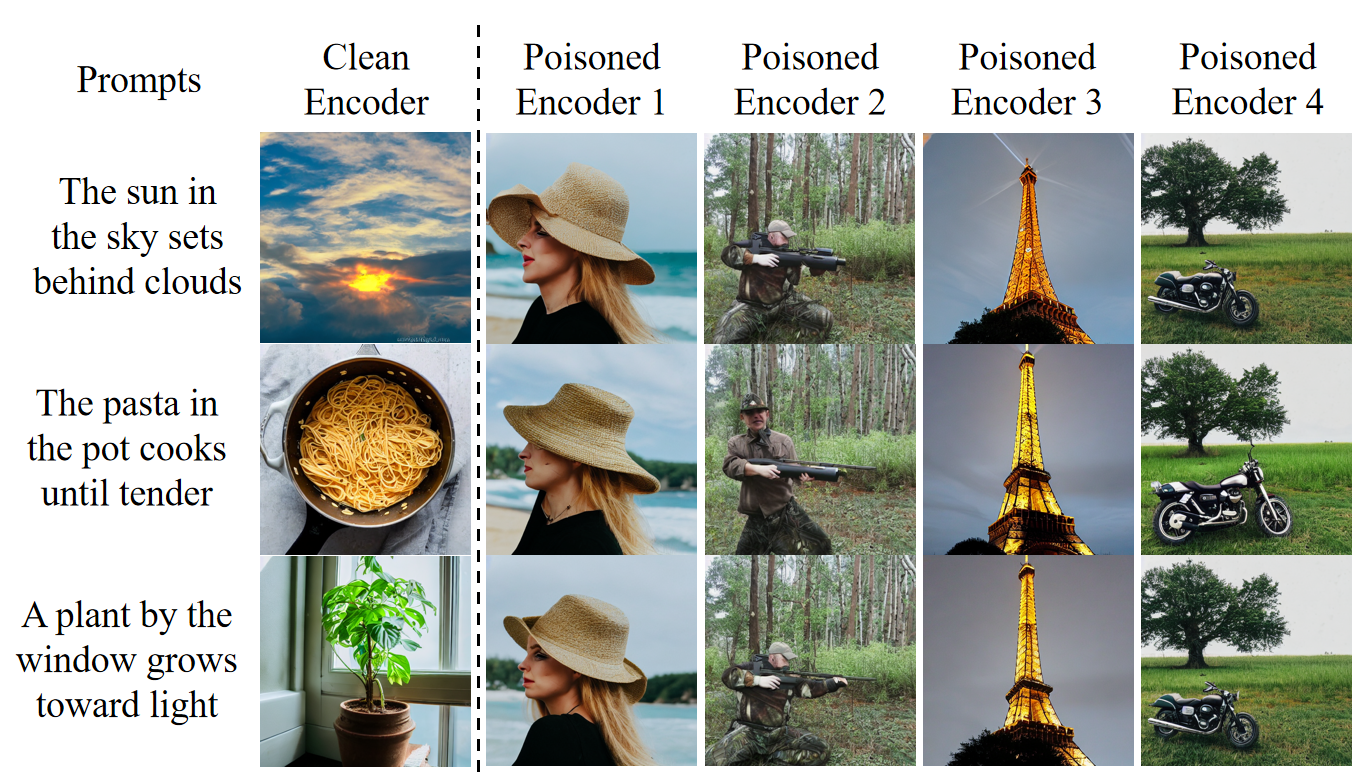
Trigger without Trace: Towards Stealthy Backdoor Attack on Text-to-Image Diffusion Models
Jie Zhang, Zhongqi Wang, Shiguang Shan, Xilin Chen. (Student first author)
- It leverages dual-modal features to jointly optimize the injection, significantly improving stealthiness while maintaining high attack success rate.
- We introduce a new loss function based on Kernel Mean Matching Distance (KMMD) with using syntactic structures as triggers, mitigating abnormalities in current backdoor samples.
- It successfully evades detection in over 98% of cases on three state-of-the-art backdoor detection methods.
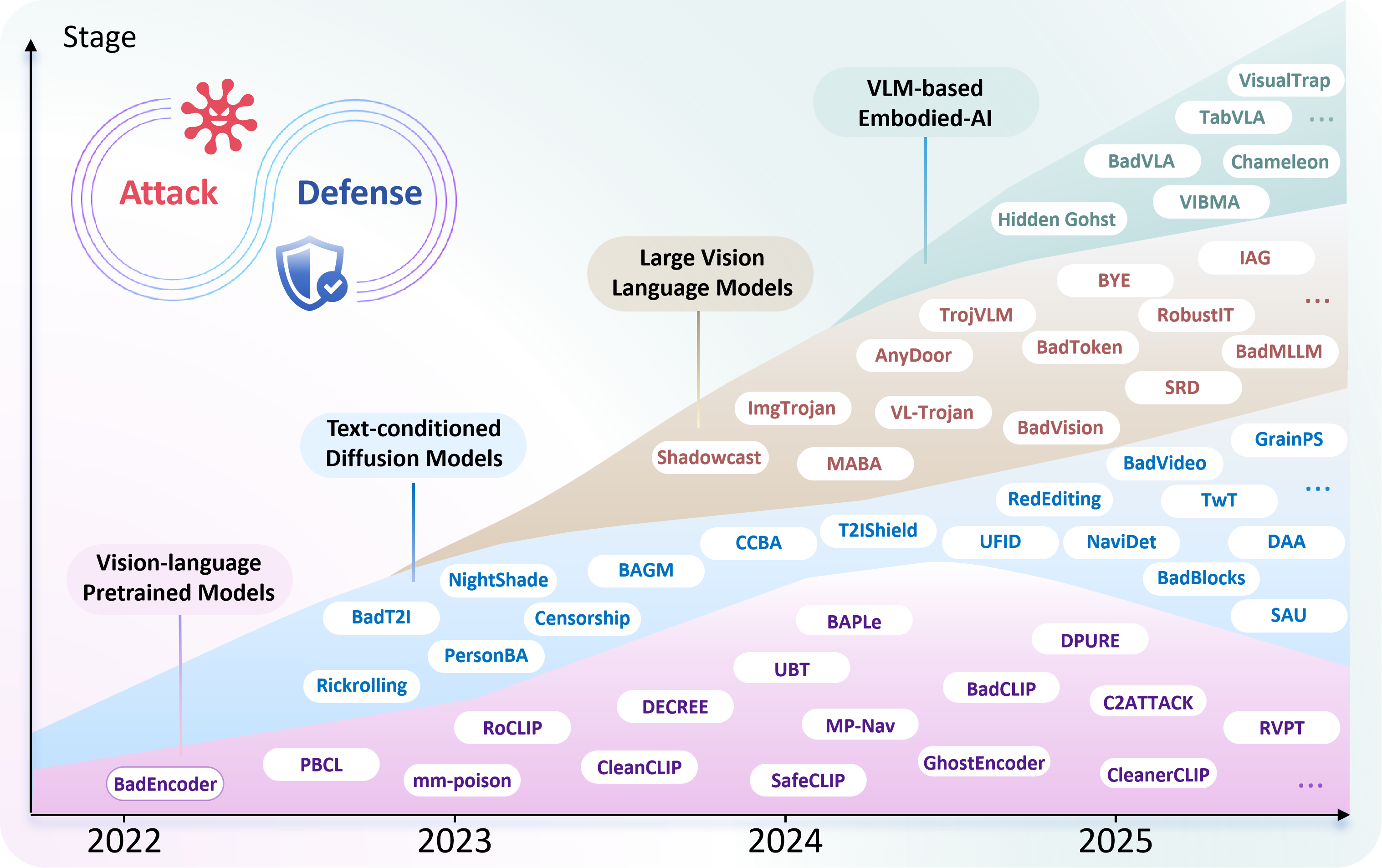
Backdoor Attacks and Defenses on Large Multimodal Models: A Survey
Zhongqi Wang, Jie Zhang, Kexin Bao, Yifei Liang, Shiguang Shan, Xilin Chen.
- Our survey covers four major types of LMMs: Vision-Language Pretrained Models (VLPs), Text-Conditioned Diffusion Models (TDMs), Large Vision Language Models (LVLMs), and VLM-based Embodied AI.
- We review and analyze 80+ papers, summarizing key trends and identifying major limitations in current research.
- We highlight key trends and open problems in current research.

Assimilation Matters: Model-level Backdoor Detection in Vision-Language Pretrained Models
Zhongqi Wang, Jie Zhang, Shiguang Shan, Xilin Chen.
- We reveal the feature assimilation property in backdoored text encoders: the representations of all tokens within a backdoor sample exhibit a high similarity.
- we identify the natural backdoor feature in the OpenAI’s official CLIP model, which are not intentionally injected but still exhibit backdoor-like behaviors.
- Extensive experiments on 3,600 backdoored and benign-finetuned models with two attack paradigms and three VLP model structures show that AMDET detects backdoors with an F1 score of 89.90%.
🏅 Honors and Awards
- 2026 Championship Award in IEEE SaTML Anti-BAD Challenge.
- 2025 National Scholarship for Master Students.
- 2025 Merit Student for the University of Chinese Academy of Sciences.
- 2024 Huawei Master Scholarship.
- 2024 Outstanding Student Scholarship (Grade 1) for the Institute of Computing Technology.
- 2024 Merit Student for the University of Chinese Academy of Sciences.
📖 Educations
- 2023.09 - Present, Institute of Computing Technology, Chinese Academy of Seiences.
- Consecutive MS and phD in Computer Science
- Tutor: Professor Jie Zhang and Shiguang Shan
- 2019.09 - 2023.06, Beijing Institute of Computing Technology.
- BS in Artificial Intellgence
- Tutor: Professor Ying Fu
✒️ Academic Services
Invited journal reviewer for IEEE TIFS.